Can Senegal Avoid a Political and Economic Crisis?
Senegal's path to stability has rarely looked narrower. What comes next for one of West Africa's most consequential economies and its escalating debt crisis?
It has been a busy year for the Senegalese political duo Ousmane Sonko and Bassirou Diomaye Faye. Starting the year as allies, they are now clear opponents in a high-stakes political battle that imperils the fiscal situation of Senegal and the broader WAEMU region.
Sonko, a former tax inspector who had become Senegal's most formidable opposition politician, served as Prime Minister starting April 2024, after he and President Faye swept to power on a wave of popular anger against the Sall-era establishment. The arrangement looked, from a distance, like a partnership between two men who had shared prison cells and a political project.
To start off with a fresh slate, the pair commissioned a full government financial audit by Forvis Mazars. The results revealed the previous Sall administration had concealed liabilities worth more than $13 billion. An initial reconciliation moved central-government debt at the end of 2023 from 74.4% to 99.7% of GDP; after the Mazars exercise, the authorities revised it again, to 111.0%.
The Fund, which had extended Senegal up to $1.8 billion as late as June 2023, suspended its loan programme. Edward Gemayel, the IMF's mission chief for Senegal, called the hidden debt “unprecedented in Africa.” The country's eurobonds, which traded around 74 cents on the dollar before the audit, began a slide that has not fully stopped.
What the concealed liabilities financed is only partly known. Forvis Mazars identified infrastructure with long payback periods, budget support during the COVID-era commodity shock, and subsidies to hold down fuel prices at the pump, which every Senegalese government since independence has treated as politically untouchable regardless of fiscal cost. The audit did not produce a complete accounting of where every franc went. Neither, so far, has the government that commissioned it.
Sonko and Faye soon found themselves at odds over their approach to the situation.
Sonko told a Pastef party congress in November 2025 that debt restructuring was “a disgrace,” an affront to African sovereignty and a capitulation to the same institutions that had enabled the crisis he now nominally had to manage. In December, he announced his candidacy for the 2029 presidential election, placing himself in direct competition with his own president three years before polling day. Through early 2026, Faye responded quietly, replacing Pastef-aligned ministers with loyalists from a newly relaunched “Coalition Diomaye Président.”
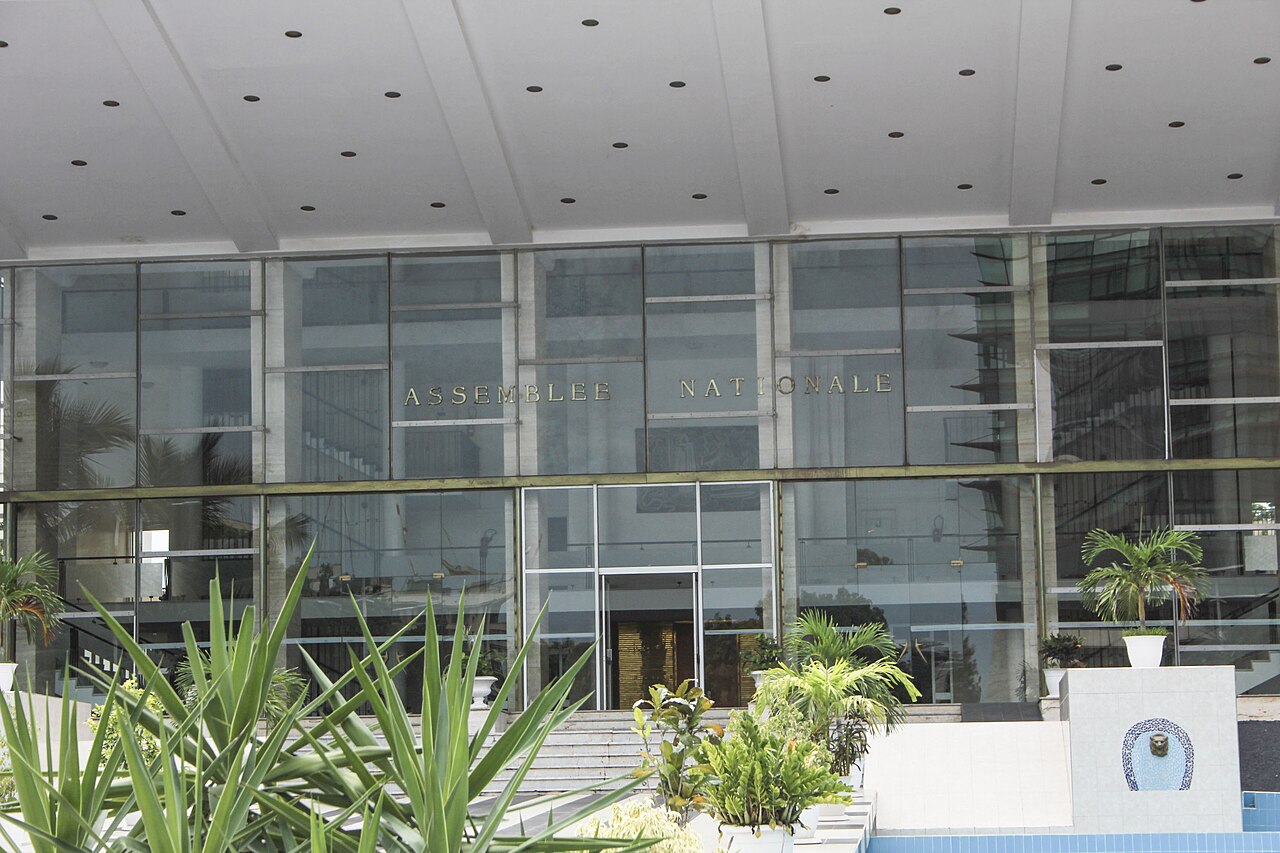
But at a National Assembly session in May, Sonko told deputies: “I am not a prime minister who blindly obeys or agrees to everything.” Days later Faye signed Decree 2026-1128, removing Sonko from office. Four days after that, Sonko was elected president of the National Assembly with a supermajority 132 of 165 votes.
By late June, the assembly Sonko now chairs had passed a constitutional revision stripping presidential emergency powers. The Constitutional Council invalidated it on July 9, one of the few institutional checks that has meaningfully constrained Sonko's reach since the rupture. On July 26, Faye launched a new political party, Kiiraay, meaning “shield” in Wolof, drawing a formal line under the most consequential political rupture in Senegal's recent history.
Started by the debt crisis, the political situation stands to make the fiscal situation worse, with the two former allies now facing off in a high-stakes game of chicken.
In July Bloomberg and Reuters reported that Senegal had retained Lazard as its sovereign debt adviser. The firm has handled some of the largest restructurings of the past two decades: Argentina's $65 billion exchange in 2020, which settled at roughly 55 cents of new bond value per dollar of old; Ghana's $13 billion exercise in 2023, where holders of dollar bonds accepted an approximately 37% net present value cut after watching prices fall to 25 cents; and Zambia's agreement the same year, completed after a three-year process under the G20 Common Framework.
Lazard joins Global Sovereign Advisory, a Paris-based firm advising Dakar since November 2025. Citigroup, in a recent analyst note, stated the conclusion plainly: “Assuming that Senegal is committed to an IMF programme, our base case is that a debt renegotiation will be necessary.” The bank modeled bondholder recovery at 43 to 50 cents on the dollar, contingent on an IMF-supported programme and a primary balance path requiring simultaneous spending cuts and revenue increases.
Revenue increases are expected to come from increased production of Senegal's recently discovered oil and gas resources. Tax increases are less defined, but the largest fiscal line item is the fuel subsidy.
Senegal has been producing approximately 100,000 barrels per day from the offshore Sangomar field since 2024, operated by Australia's Woodside Energy, and the Greater Tortue Ahmeyim LNG joint venture with Mauritania shipped its first cargo in April 2025. GDP growth reached 12.1% year-on-year in the first quarter of 2025, driven by the start of hydrocarbon production; growth outside hydrocarbons was 3.1%.
Much of that production does not reduce the government's fuel bill or flow directly to the treasury. Most Sangomar cargoes have been sold abroad, although Senegal's SAR refinery received its first domestic cargo in February 2025 under the project's domestic supply obligation. The country still imports refined products and subsidises their price at the pump.
Petrosen, the national oil company, holds an 18% equity stake in Sangomar but carries the debt it took on to finance that position. Woodside recovers operating costs and capital expenditure before any profit-sharing. Of roughly $4 billion in gross hydrocarbon revenues in 2025, Petrosen received approximately $600 million, of which half went to service its own liabilities, leaving the government's net oil take near $200 million.
Against that, the 2026 fuel subsidy bill, originally budgeted at 250 billion CFA francs, is now projected to reach 774 billion CFA at current prices and potentially 1.39 trillion CFA under an adverse price scenario. Finance Minister Cheikh Diba told parliament the overrun alone could exceed $2 billion, consuming close to a fifth of the national budget simply to hold the line on petrol prices. Those prices have been elevated in part by the Israel-Iran conflict, which has kept Brent crude above $90 a barrel through much of 2026, tightening the arbitrage for Russian refined product exports to West Africa. Meanwhile Senegal is exporting hydrocarbons to Europe and subsidising imported fuel for its own population. A second refinery, SAR 2.0, with 5.5 million tonnes of annual capacity designed to process Sangomar-grade crude, is planned but not operational before 2029.
Reaching the required primary balance means cutting the deficit, raising the tax-to-GDP ratio from 19% toward the WAEMU community target of 20–23%, and reforming or removing the fuel subsidy. For restructuring to work, Senegal needs an IMF programme. The programme requires cutting the deficit, raising taxes, and ending or restructuring the fuel subsidy. Almost any solution runs through the legislature controlled by Sonko.
Faye faces an institutional trap: the tools available to him, like executive decree in narrow domains, fall well short of what the adjustment requires. He cannot restructure the tax code or remove the subsidy by presidential fiat. He needs votes in parliament to move forward any policy agenda.
Pastef holds 130 of 165 seats, a supermajority assembled in November 2024 when the Sonko-Faye alliance was intact. No sitting Pastef MP has moved to the presidential camp. The dozen or so individuals who have publicly aligned with Faye are party officials, hospital directors, and regional administrators, none of whom hold assembly seats.
Sonko has taken a hard line against restructuring. On June 15, concurrent with an IMF delegation visit to Dakar, he moderated that position in interviews with RFI and France 24: “We don't hold rigid positions in the absolute sense. We are not here to obstruct.” But two weeks later, the assembly he chairs tried to pass a constitutional revision removing presidential emergency powers.
Faye has not thrown in the towel. Since the May rupture, his government has continued formal engagement with the IMF, and the Fund's Dakar office has maintained working contact with both the presidency and the Finance Ministry. Kiiraay, Les Patriotes Républicains, launched July 26 and assembled from movements and parties that previously orbited the Faye-Sonko alliance, represents his parallel political play. Faye has even made overtures of reconciliation towards former president Sall, supporting Sall's bid for a position in the UN. Abdourahmane Diouf, a former minister and Kiiraay ally, described it as “the greatest parliamentary reversal in Senegal's history.”
But the options available to Faye are limited. Article 87 of the constitution prohibits the president from dissolving the assembly in its first two legislative years; that window closes in September or November 2026, depending on interpretation, with the current legislature elected in November 2024. If Faye dissolves, calls snap elections, and Kiiraay wins enough seats to break Pastef's supermajority, the legislative impasse clears.
The electoral arithmetic does not obviously support that outcome. Sonko spent seven years building Pastef on personal loyalty forged through persecution; Faye, by contrast, ran in 2024 as Sonko's chosen tête d'État when Sonko himself was barred from the ballot. The organisations behind Kiiraay are newly convened and largely untested; few of their constituent figures have independent voter bases of their own. Optimistic projections place Kiiraay at 35 to 50 seats in a snap election, well short of what would be needed to pass IMF conditionality legislation against a Pastef rump of 80 to 90.
The path that could work for Faye runs through economic pain. Pastef deputies would need to calculate, individually, that Sonko's obstruction is damaging their local standing enough to justify defection. That calculation requires the deterioration to be visible and attributable. The legislative majority Faye needs to resolve the crisis may only materialise after the crisis has already deepened.
Even if Faye finds a legislative path, the structural fiscal problems do not resolve automatically.
Senegal's interest payments grew 32% in 2025 while public revenues grew 11.8%, according to Ministry of Finance data. The debt-service burden is expanding nearly three times faster than the state's revenue base.
The fuel subsidy is the most direct pressure point, running at roughly 3–4% of GDP annually. It is also politically close to impossible to remove in the current configuration. Nigeria's Tinubu removed his country's equivalent on inauguration day in May 2023, calling it unavoidable. Fuel prices tripled. Inflation reached 24% within months. By 2024, nearly half of Nigerians were below the poverty line, and protests of August 2024 directly referenced the cut. Tinubu survived with a legislative majority and a fresh mandate. Faye has neither. Removing the subsidy without assembly support, in a country with a recent history of politically driven unrest, hands Sonko easy slogans for the 2029 presidential campaign.
Phase 2 of Sangomar development, the SAR 2.0 refinery, and the eventual normalisation of oil fiscal flows through Petrosen would shift the picture significantly, but not before 2029. If the subsidy persists, if oil revenues remain trapped in Petrosen's balance sheet, and if non-oil growth runs at 2.2% rather than the headline 12.1% figure boosted by hydrocarbon production, any new bonds begin compounding against the same constraints that created the crisis. Zambia reached a restructuring agreement in 2023; some market participants are already questioning whether a second negotiation will be needed before 2030.
As it stands, the Senegal eurobonds are priced for an orderly restructuring that looks difficult to achieve.
Ghana's experience offers a relevant precedent. Dollar-denominated Ghanaian bonds fell from around 55 cents to below 25 cents between the announcement of a restructuring review in December 2022 and the finalisation of terms in mid-2023. Holders who waited for clarity absorbed significantly more pain than the eventual NPV cut implied. Citi's recovery model for Senegal assumes an IMF programme, a functioning primary balance adjustment, and a legislative process capable of passing the reforms that underpin it.
Senegal has so far remained current on its Eurobonds by turning increasingly to the regional market, but this does not remove the debt burden so much as roll it forward at a higher cost. To the extent that Dakar is issuing new domestic debt to meet existing obligations, it is capitalising today's debt service into tomorrow's principal and interest bill. Shorter maturities make that burden recur more frequently, while yields approaching 7% mean that each refinancing leaves a larger claim on future tax revenues.
WAEMU banks are the principal buyers of the region's government securities and already hold sovereign claims equivalent to an average 38% of their assets. Net regional issuance reached CFAF 5 trillion in 2025, nearly twice what had initially been projected, and Senegal's unusually large financing needs are now competing for the same finite pool of bank liquidity required by Côte d'Ivoire, Togo, Benin and the union's other governments. Continued borrowing could therefore postpone Senegal's reckoning only by increasing its eventual adjustment and transferring part of the risk to the wider WAEMU financial system: crowding out private credit, raising yields for neighboring sovereigns and exposing regional banks to losses if Senegal is ultimately forced to restructure domestic as well as external obligations.
The charted path to a solution would require Faye to find a fix to the legislative impasse, convince the populace to accept deep cuts to the fuel subsidy, and move forward with fiscal reforms. Each of those tasks requires the other two to be possible first. A restructuring without assembly support cannot pass the legislation creditors require. A subsidy reform without a restructuring cannot generate the fiscal room to absorb the political cost.
While Senegalese and IMF officials express public optimism, the situation on the ground looks severe. But given the narrow path that represents success, this optimism may be generous. The question for bondholders is therefore not simply whether Senegal can continue meeting its payments. It is how much larger the eventual adjustment becomes while it does. Domestic borrowing can postpone the political bargain, but only by increasing the claims on Senegal's future revenues and distributing the risk across the WAEMU financial system.